PUPPY DEVELOPMENT CENTER • TRAINER CHECKLIST
Puppy Socialization Checklist
Socialization is not “go meet 47 strangers, 12 dogs, a skateboard, a mariachi band, and a lawn blower before lunch.”
It is teaching your puppy that the world is workable, recoverable, and mostly not trying to kill them.
The goal is not a puppy who has seen everything. The goal is a puppy who can handle things.
The Real Goal
We want calm curiosity, recovery after surprise, and confidence under light pressure — not flooding, not chaos, not “he was terrified but technically exposed.”
MODULE 1
The Golden Rules
Do this
- Keep exposures short and positive
- Let the puppy observe before interacting
- Pair new things with food, play, or calm praise
- Use known healthy dogs and safe environments
- Carry or create distance when needed
Do NOT do this
- Flood the puppy
- Force greetings
- Let strangers crowd the dog
- Use dog parks as “socialization”
- Confuse overstimulation with confidence
Bad socialization is not neutral. Repeated scary or overwhelming reps can make fear worse, not better.
MODULE 2
When the Window Matters Most
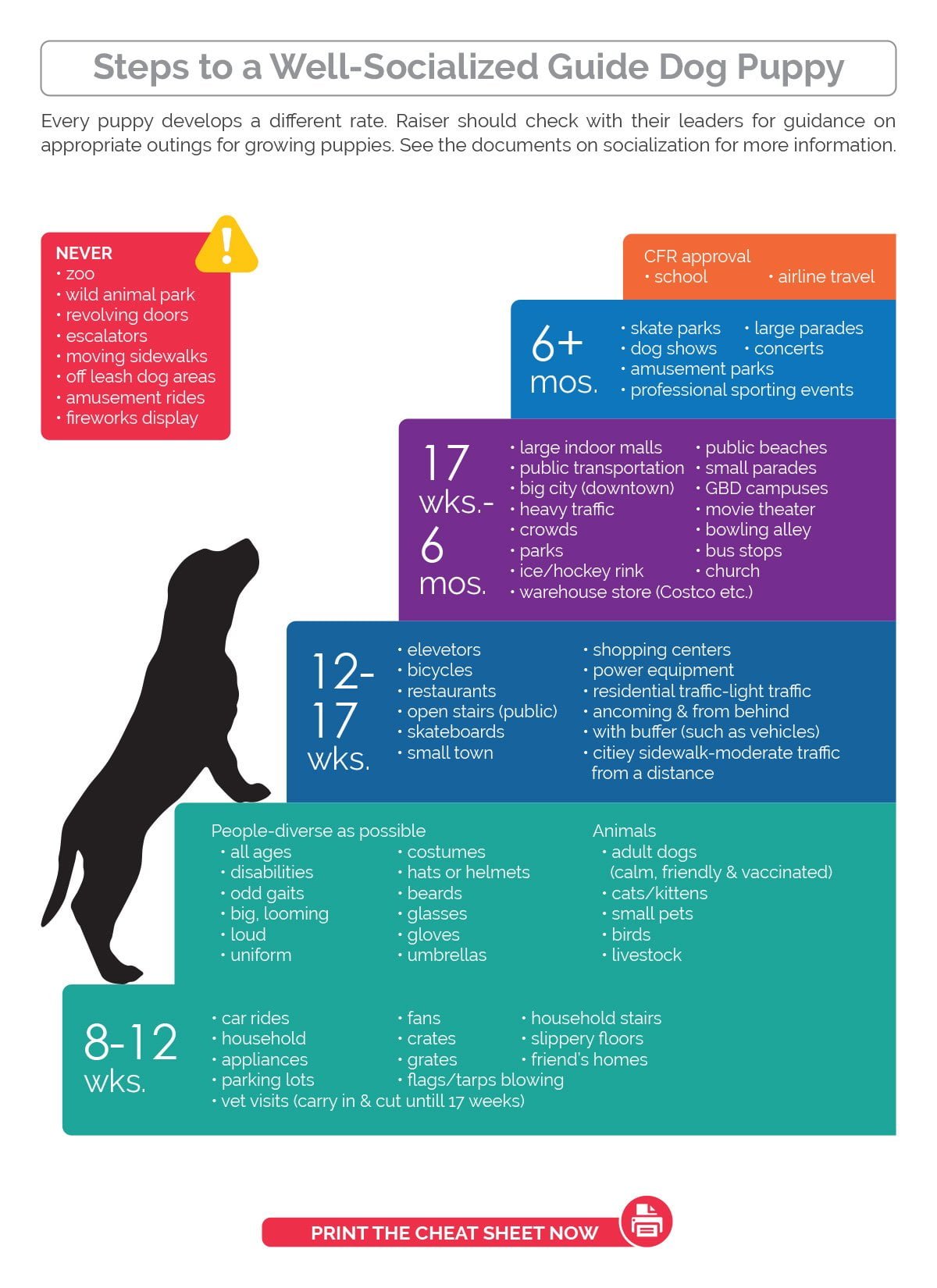
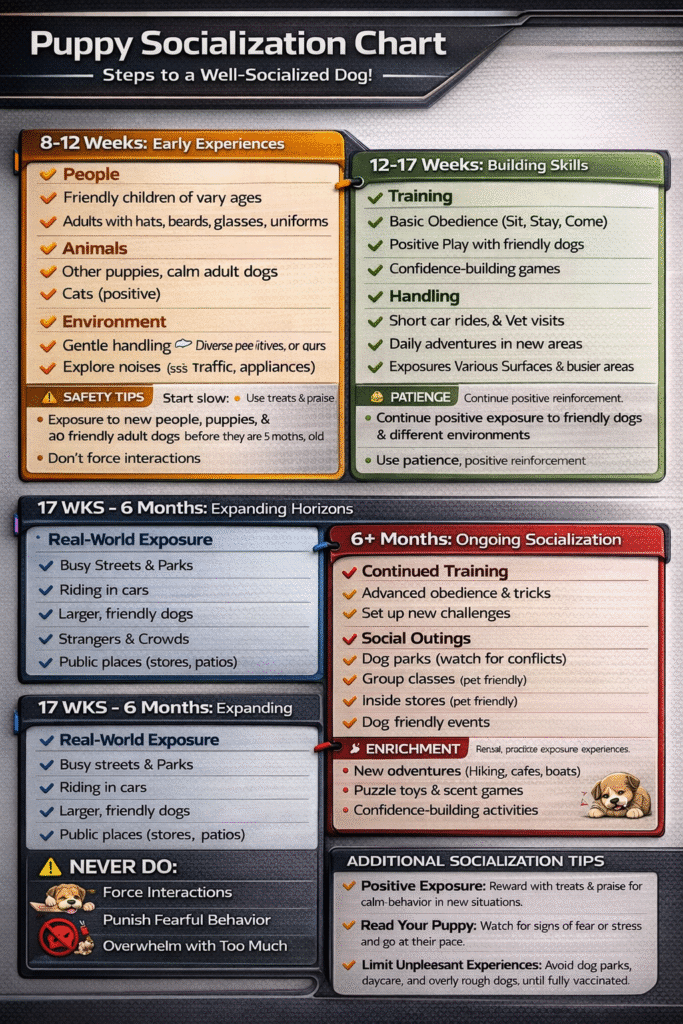
The biggest socialization window is the first 3 months. That does not mean “panic and do everything.”
It means be intentional while the brain is still wide open.
Translation: do not wait until the puppy is older and then wonder why the world suddenly feels spooky.
MODULE 3
What to Expose Your Puppy To
People
- Men
- Women
- Kids who can behave like civilized humans
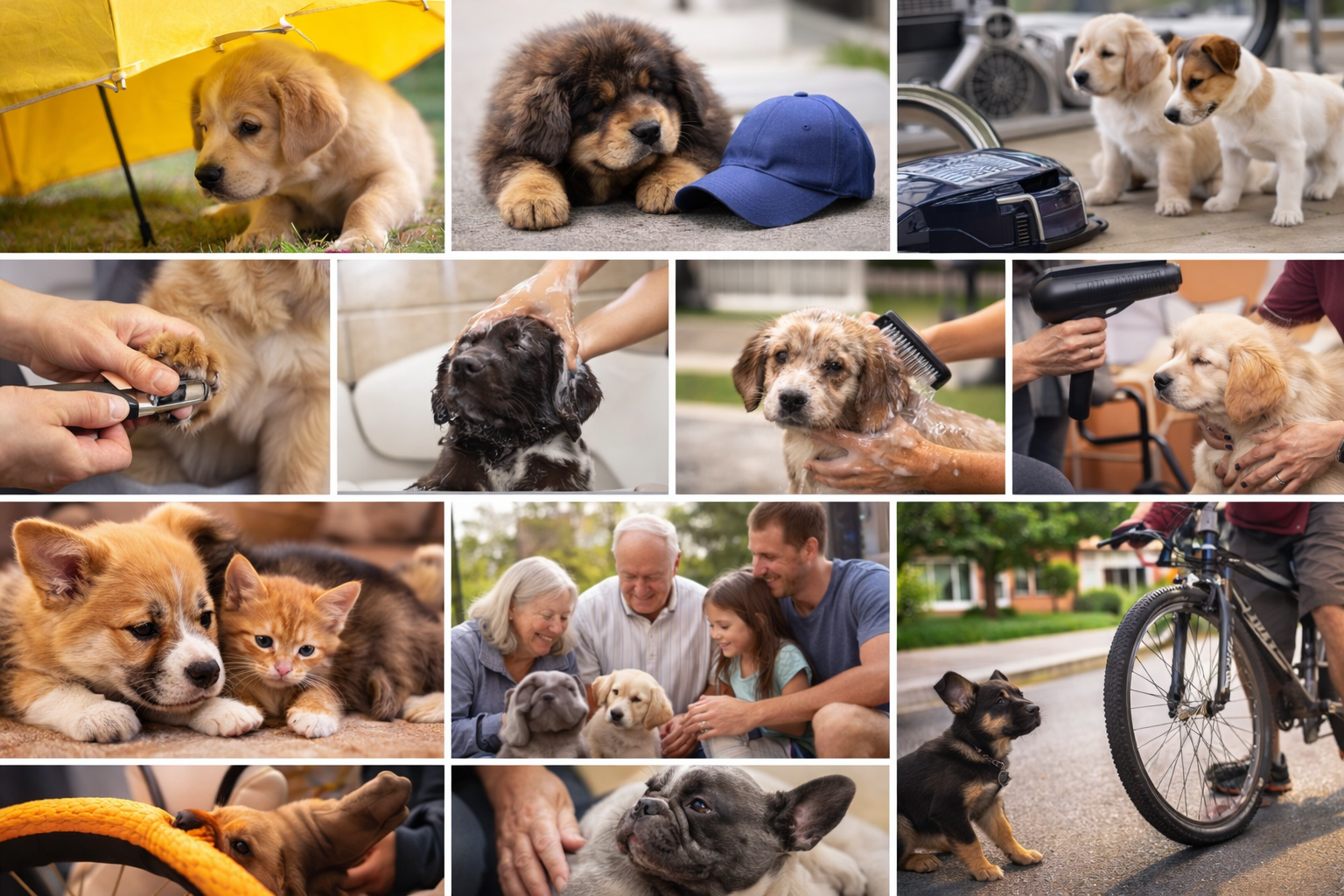
- People with hats, glasses, beards, uniforms, walkers, umbrellas
- Different voices, sizes, and movement styles
Dogs and Other Animals
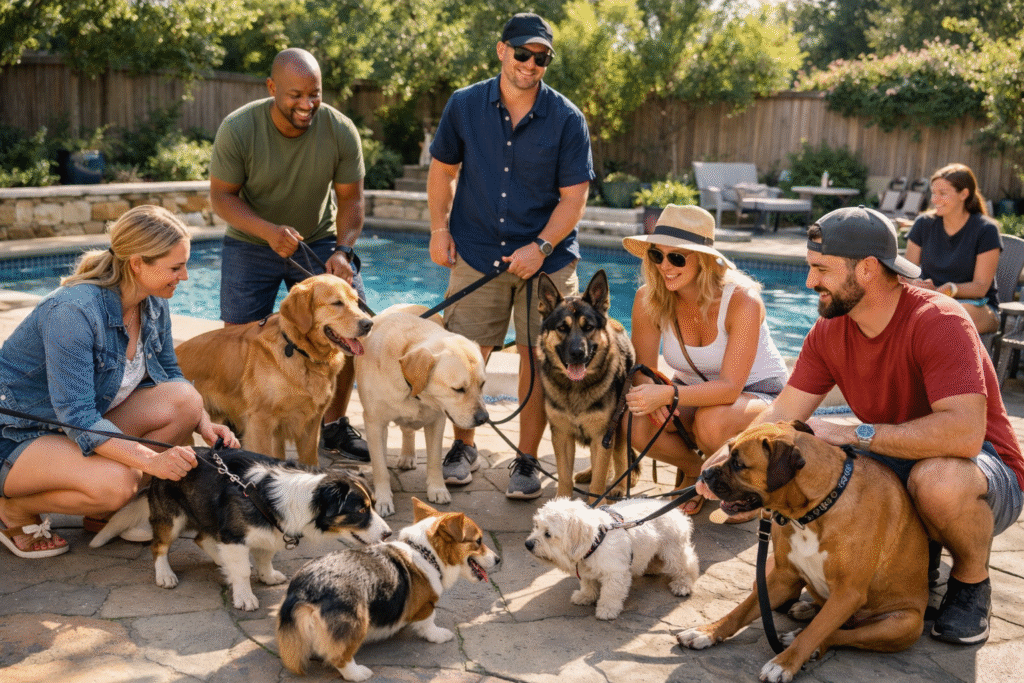
- Known, healthy, appropriate adult dogs
- Well-run puppy social groups
- Calm cats, if relevant
- Other species at a safe distance when useful
Not every dog your puppy sees needs to become a meet-and-greet.
Places and Surfaces
- Grass, gravel, concrete, tile, wood, rubber mats
- Front yard, driveway, parking lots, patios
- Quiet parks and safe public spaces
- Low-pressure trips where the puppy can observe and leave successful
Handling and Body Care
- Paws
- Ears
- Mouth
- Collar / harness handling
- Gentle brushing
- Towel, nail-care prep, bath prep
Noises and Motion
- Doorbells
- Vacuum at a sane volume and distance
- Traffic
- Wheelchairs, bikes, skateboards, carts
- Household clatter
MODULE 4
Safe vs. Stupid Socialization
Smart
Known healthy dogs, safe outdoor spaces, calm observation, short sessions, positive exits.
Stupid
Dog park roulette, random pet-store chaos, loose unknown dogs, forcing contact, and pretending “he’ll get over it” is a plan.
Common sense wins: safe exposure is the point, not unnecessary risk.
MODULE 5
What Counts as a Good Rep?
A good rep is not “the puppy technically survived it.” A good rep usually looks like this:
- Not frozen
- Not panicking
- Able to eat, play, orient, or recover
- Curious or neutral is great
- A little unsure is fine if recovery is quick
If your puppy is shutting down, fleeing, screaming, or getting hammered over threshold, that is not confidence-building. That is a lousy field trip.
MODULE 6
Handling Fear Periods Without Making a Mess
Puppies and adolescents can go through temporary weird phases where the trash can is suspicious, the mailbox is clearly haunted, and the leaf in the driveway is now an emotional event.
What to do
- Create distance
- Lower the intensity
- Let the puppy observe
- Pair with something good if the puppy can still function
- Leave successful
What not to do
- Drag them toward the thing
- Laugh it off and push through
- Flood them
- Scold them for feeling things
MODULE 7
Printable Puppy Socialization Checklist
| Category |
Exposure |
Done? |
Puppy Response |
Notes |
| People | Men / women / calm kids / hats / glasses | ☐ | Curious / neutral / unsure / nervous | ____________ |
| Dogs | Known healthy adult dog / safe puppy | ☐ | Curious / neutral / unsure / nervous | ____________ |
| Places | Driveway / front yard / patio / quiet park | ☐ | Curious / neutral / unsure / nervous | ____________ |
| Surfaces | Grass / gravel / concrete / tile / mat | ☐ | Curious / neutral / unsure / nervous | ____________ |
| Handling | Paws / ears / mouth / collar / harness | ☐ | Curious / neutral / unsure / nervous | ____________ |
| Noises | Doorbell / vacuum / traffic / carts / bikes | ☐ | Curious / neutral / unsure / nervous | ____________ |
| Life Skills | Car ride / crate / grooming prep / vet handling | ☐ | Curious / neutral / unsure / nervous | ____________ |
You are not looking for fake bravado. You are looking for positive exposure and better recovery over time.
APPENDIX
The 7•7•7 Rule (Socialization Without Chaos)
For owners who feel overwhelmed, or puppies who aren’t fully vaccinated yet, this is the simple-structure version:
confidence without pressure, exposure without roulette.
Rule #0 (Non-Negotiable): if your puppy is not fully vaccinated, public dog-traffic ground is lava.
Socialize with safe exposure — not mingling.
Version 1 — Very Young Puppies (8–12 Weeks)
7 People + 7 Places + 7 Sounds with parvo-safe rules.
7 People: trusted adults, calm kids, hats, glasses, beards, seated people, quiet energy.
7 Places (Parvo-Safe): your home, backyard, friend’s clean home, garage, driveway, safe patio blanket, parked car.
7 Sounds: doorbell, vacuum in another room, blender, traffic through a window, clapping, TV, normal music.
Version 2 — Fully Vaccinated Puppies
Same structure — now we add short real-world reps and calm exits.
7 People: men, women, kids, hats, canes, people who ignore puppy, people who ask first.
7 Places (Short Visits): sidewalks, parks, pet-friendly stores, friend’s yards, training facility, outdoor cafés, parking lots.
7 Sounds / Experiences: carts, doors, kids playing, traffic, distant barking, applause, urban noise.
Non-Negotiables: neutrality beats forced bravery, short exposure beats long exposure, puppy gets choice, calm praise + food builds confidence, and if puppy says “nope,” you listen.
Smart exposure now = calmer adults later.
MODULE 8
Big Mistakes People Make
Mistake 1
Confusing overstimulation with confidence.
Mistake 2
Letting every stranger touch the puppy.
Mistake 3
Thinking “socialization” means play with every dog in town.
Mistake 4
Waiting too long because of bad internet advice.
Mistake 5
Pushing through obvious fear.
Mistake 6
Forgetting rest, naps, and recovery matter too.
NEXT STEP
Need Help Doing This Correctly?
Socialization done right builds confidence. Socialization done poorly builds baggage.
If your puppy is already showing fear, overstimulation, leash chaos, barking, biting, or “tiny shark with feelings” energy,
we’ll help you sort it out before it becomes your whole personality.
We help with:
- Puppy confidence
- Leash manners
- Crate comfort
- Bite inhibition
- Housebreaking structure
- Socialization done right
Best fit for:
- New puppy parents
- Rescues and renamed puppies
- Fearful or shy puppies
- Over-aroused land sharks
- Families who want help before things get weird