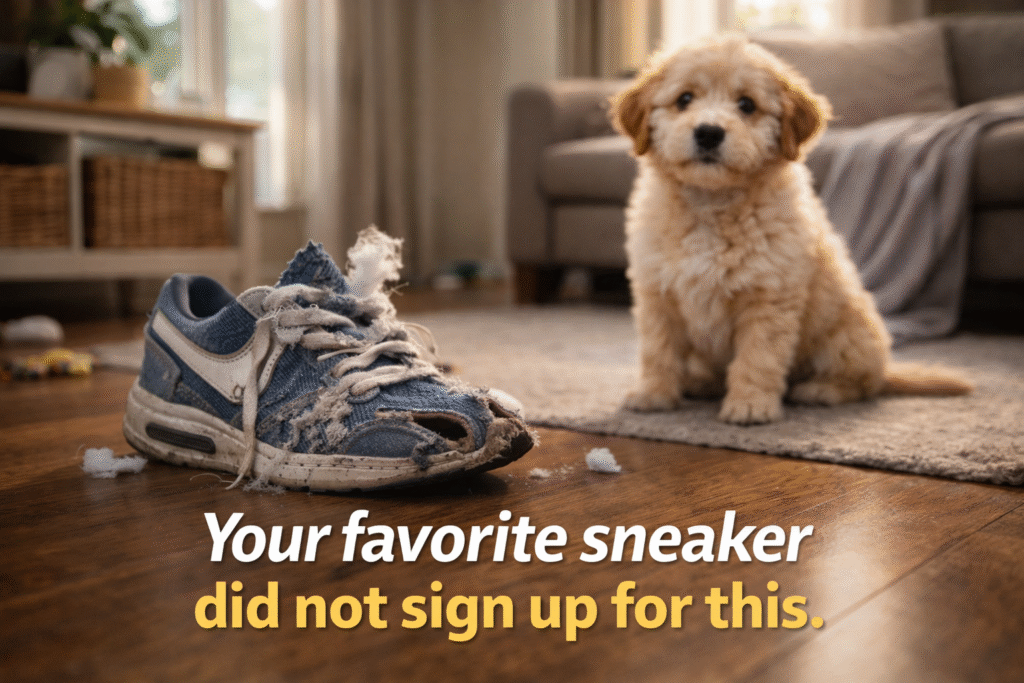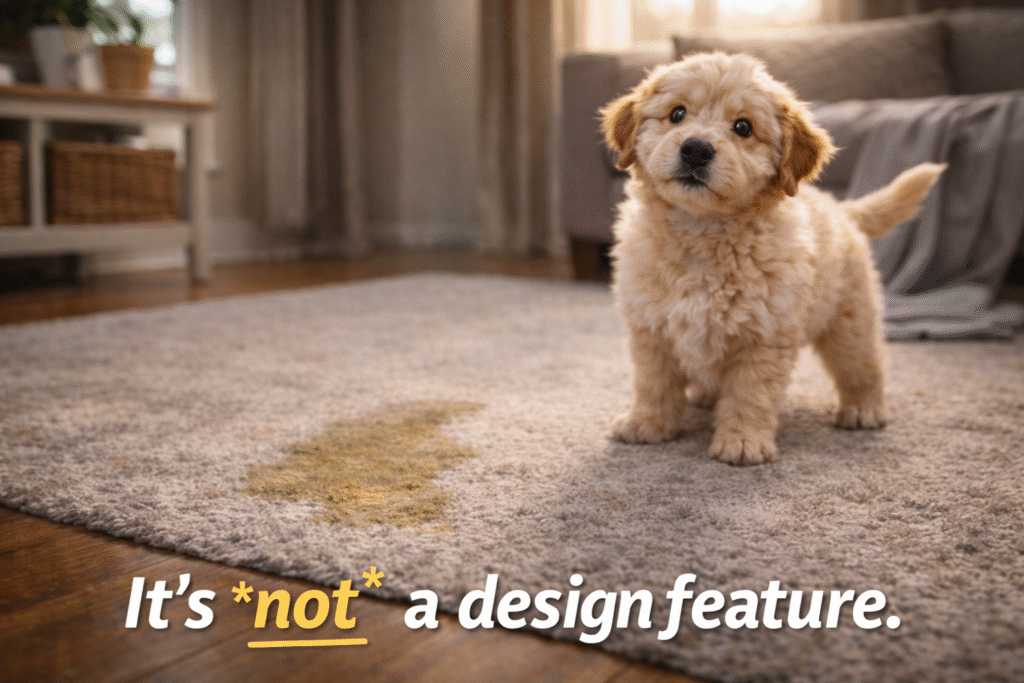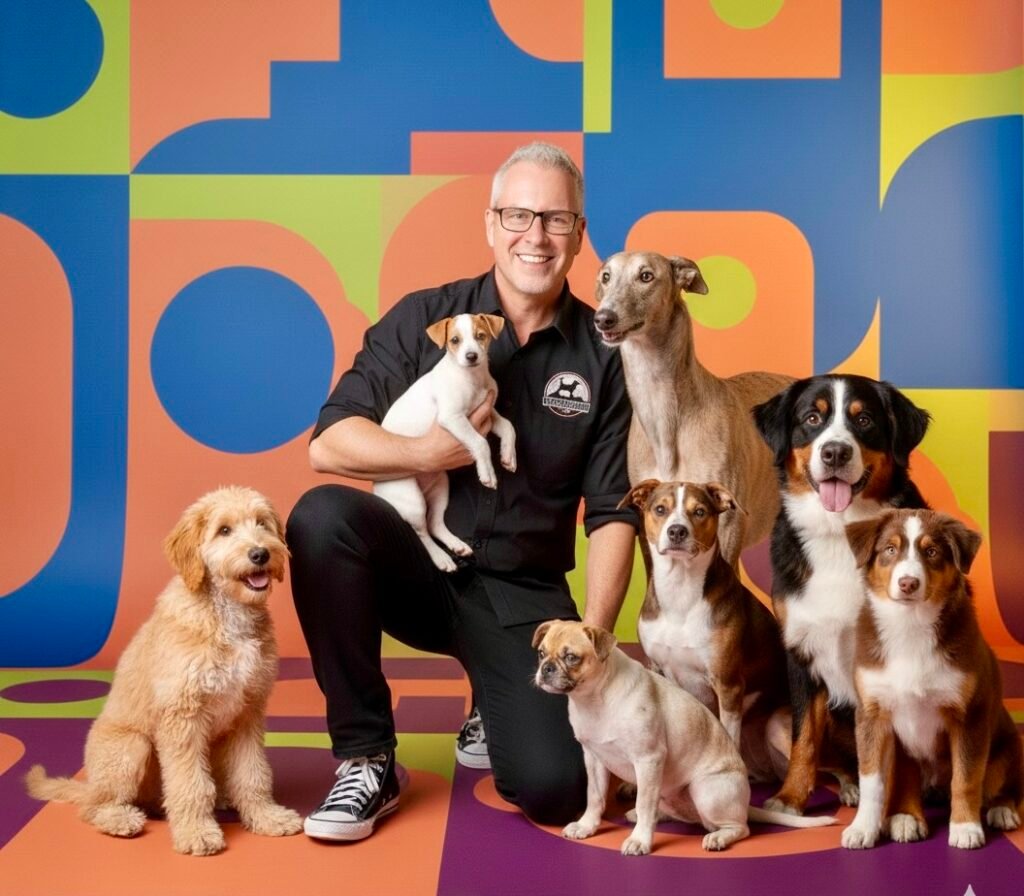
Your Puppy Is Cute. Also…a tiny furry criminal with teeth.

 The “Everything Puppy” In-Home Program


Private, in-home puppy training + Lifetime Access E-Learning Center + our Exceptional Canines Proprietary Methods, In Phoenix and Surrounding Cities


Built to Turn


“What did we just adopt?” into “Wow… this dog is Exceptional.”


Best for:

first-time puppy parents,

busy families, high-energy breeds,

and anyone who wants results without living in chaos.


You Thought You Were Getting a Puppy.


What you actually got is:


  • a land shark with zoomies
  • a bladder the size of a raisin
  • a talent for finding the one thing you can’t afford to replace
  • and an emotional support shadow that follows you into the bathroom like it pays rent


If you’re already exhausted and you’ve only owned this dog for six minutes, congrats — you’re normal.

This program exists so your puppy doesn’t become a 75-lb “we need help” situation later.

Who This Is For

You’re in the right place if…

  • Potty training feels like a hostage negotiation
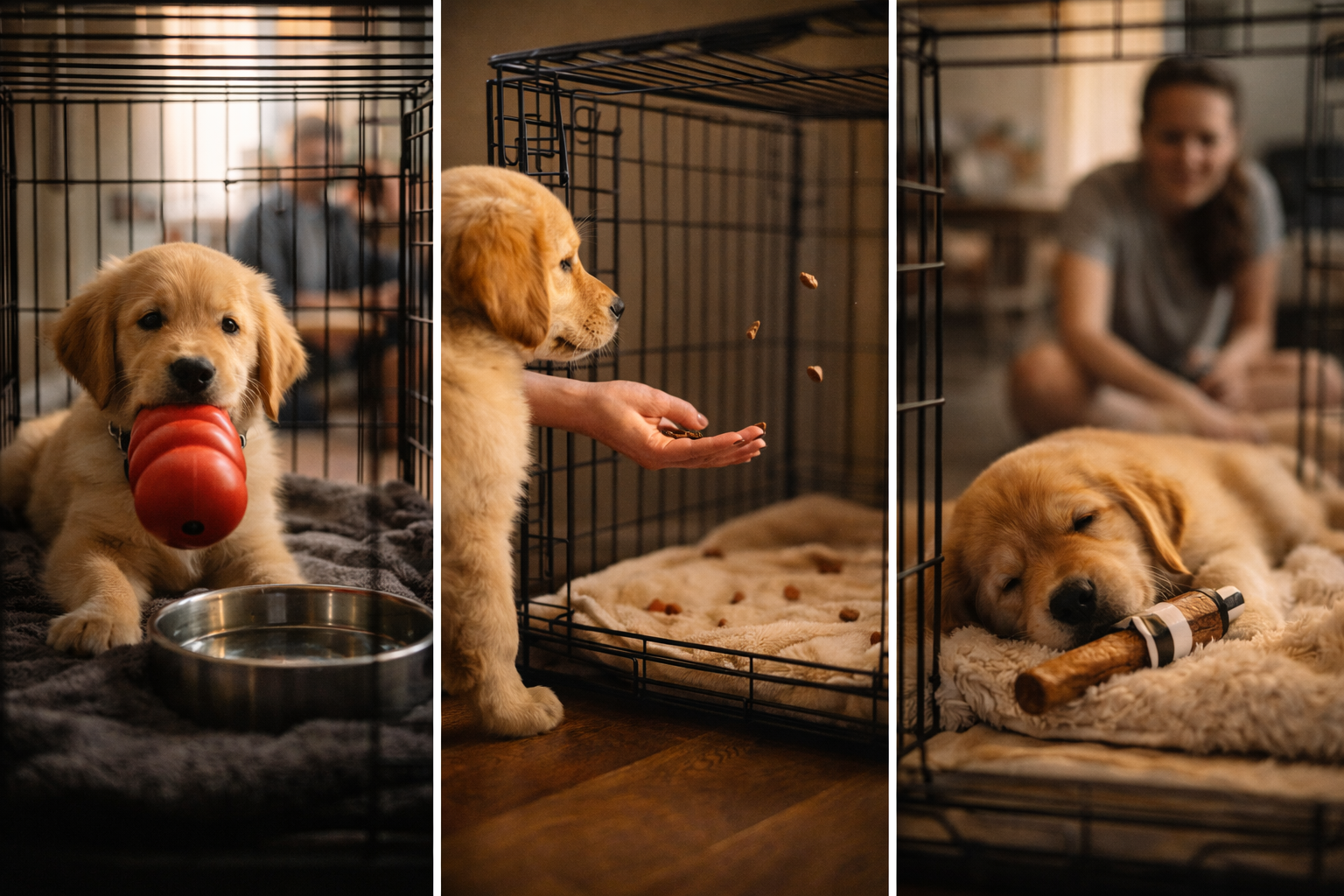
  • Crate training feels like a crime scene documentary
  • Your puppy bites hands, pant legs, kids, guests, furniture, and sometimes the air
  • Socialization is confusing (“do I take them everywhere or nowhere?”)
  • You want a friendly, adaptable family dog — not a tiny chaos wizard

If you nodded even once, you’re not behind.
You’re just raising a puppy.

In-Home Private Sessions


   Everything Puppy Passport


 E Learning Portal for Puppy Owners

Why Puppy Training Isn’t Just About Skills

Most people think puppy training is about teaching commands.

Sit.
Down.
Stay.
Come.

That’s the part everyone sees.

What most people don’t realize is this:
puppies aren’t just learning what to do —
they’re learning how to handle the world.

Every experience is shaping:

  • How they regulate stress
  • How they recover from surprises
  • How they decide what’s safe
  • How much they trust you when things get weird

Skills without emotional regulation look great…
until life shows up.

A dog who can “sit” but can’t think under pressure will fall apart.
A dog who knows commands but hasn’t learned how to recover will panic.
A dog who learned fast — but not deeply — will crack under distraction.

That’s why we don’t just train behaviors.
We train nervous systems.

We teach puppies:

  • How to pause instead of react
  • How to choose instead of explode
  • How to check in instead of bolt
  • How to settle instead of spiral

Skills are the surface.

Confidence, clarity, and recovery are the foundation.

That’s how you get a dog who doesn’t just obey —
but can handle real life without

losing their mind.
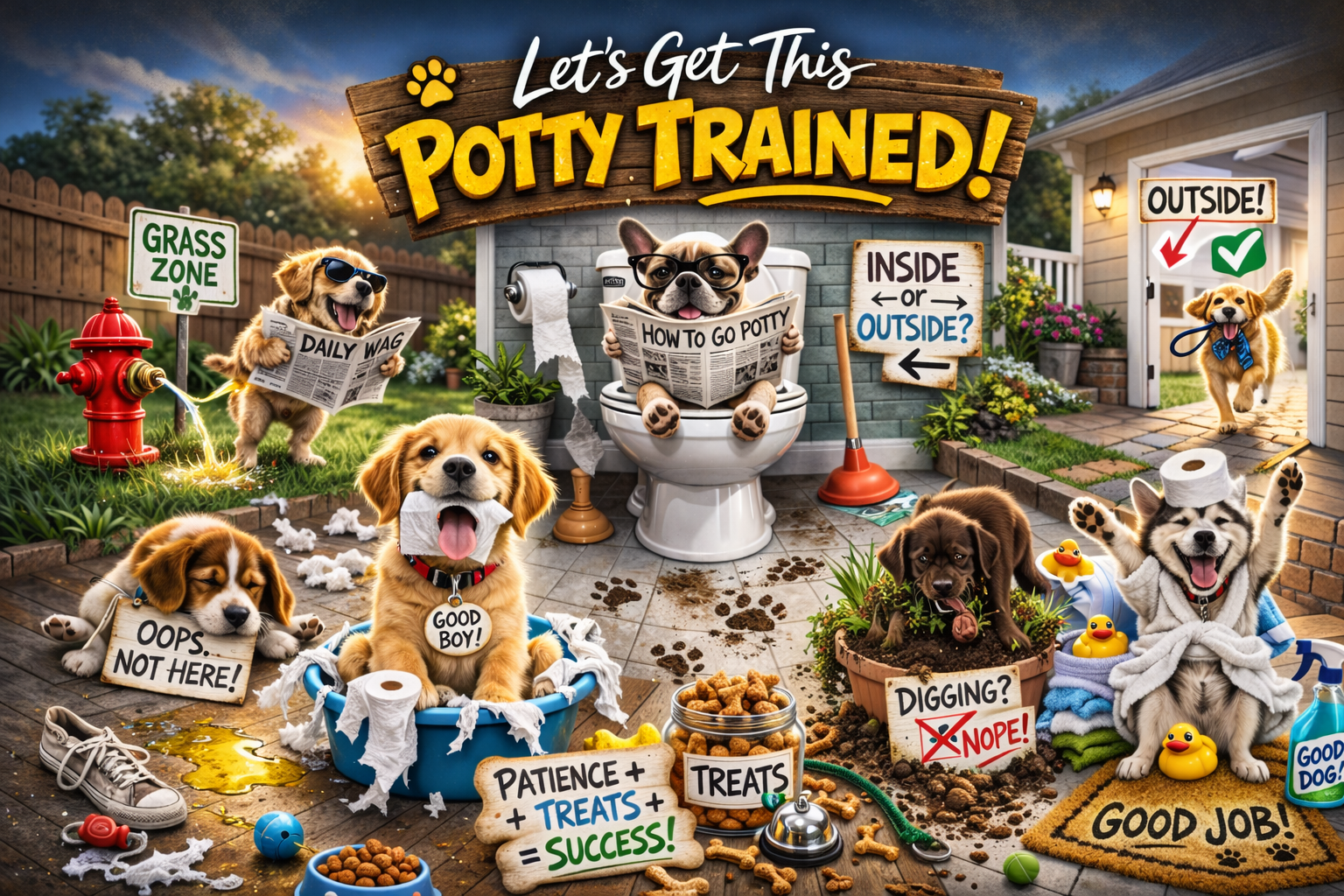
Before You Choose a Program,

Read This


We Offer 3 Lanes

Depending on Your Goals, Breed, and Budget:


 Jumpstart 

Gold Standard 

Platinum “Unlimited”


This Is the Part Most People Skip — and Regret

Program Options

Choose the phase that fits your dog right now.

Reading this first will save you time, money, and a lot of unnecessary frustration later.


These programs aren’t random packages.


They’re phases — built around development, not wishful thinking.

Phase 1 — Fast Start Program


Foundations & clarity

This is where learning actually begins. Language, structure, and understanding —
without pressure or distraction. 


Explained in Detail Below

Phase 2 — Gold Standard Program


Structure under light distraction

Skills start working outside the living room. Focus, leash manners, recall expansion —
without rushing maturity.


Explained in Detail Below

Phase 3 — Platinum Program


6-Month Unlimited Training

Proofed obedience in real life.

This is where reliability is built across environments, distractions, and maturity.


Explained in Detail Below

Program Options, Phases,

and Things Most Trainers Don’t Explain. This is the difference between a dog who is “trained”
and a dog who is actually reliable.


The sections below aren’t fluff.


They’re here so you understand why
each phase exists — and how to choose the right lane.

Pick what you need. You do not have to read every toggle. This isn’t homework.

Phase 1 — Foundations

Our Jump Start Program

This is where learning actually begins.

In Phase 1, we’re working with a developing brain.

Think: kindergarten through early elementary — depending on your puppy’s age, breed, and maturity.

This phase is about installing language and clarity.
Not distraction.
Not proofing.
Just understanding.

What We Install in Phase 1

Name recognition
Especially important for rescues or renamed puppies
Marker word training
Your “Yes” actually means something
Emergency recall foundations
The beginning of “come” that matters when it matters
Potty training structure
A plan that works in real life — not just in theory
Crate work
Safe space, not puppy jail
Bite inhibition
Because tiny teeth have big confidence
Early impulse control
Patience, young gremlin
Early socialization (done correctly)
Confidence-building, not random overstimulation
Work-to-eat toy introductions
Brain work = calmer puppy (and calmer humans)
Take It / Leave It
Levels 1–2

The Goal of Phase 1

Your puppy understands the rules of the world they live in —
and how learning works inside your home.

This phase sets the tone for everything that comes next.

Phase 2 — Structure

Our Gold Standard Program

(Includes Phase 1 Training)

By now, the foundation exists.

Your puppy understands the language — now we carefully introduce real life.

This is where structure starts to matter
outside the living room.

What Expands in Phase 2

Recall expands
Everyday recall + emergency recall (long line, yard, front yard)
Leash manners begin to matter
We start building calm walking habits before bad habits get loud
Place / bed commands start
Structure + calm in the home (and during normal daily chaos)
Focus is tested lightly
Not pressure — just gentle reality checks
Socialization continues
Humans, dogs, places, sounds (done correctly, not randomly)
Take It / Leave It / Drop It
Level 3 introduced
Jumping on visitors (and you)
Addressed with structure so greetings don’t turn into parkour
Mouthing and prey drive
Guided correctly — not ignored, not punished, not “they’ll grow out of it”
Light corrections when needed
Using Operant Conditioning — clear feedback, not emotional reactions
Gradual desensitization to distractions
We build tolerance and confidence step-by-step

This phase is early proofing.
Not advanced obedience.
Not high-pressure expectations.

The Goal of Phase 2

Your puppy can choose you
when some things are interesting — but not overwhelming.

That choice is what makes Phase 3 possible.

Our Most Popular Program

Platinum

6-Month Unlimited Training

Includes Phase 1, Phase 2, and Phase 3
(This is where obedience gets proofed and is on its way to becoming an Exceptional Canine.)

This is where real obedience lives.

Phase 3 only works because Phase 1 built clarity and Phase 2 added structure —
proof without foundations always cracks.

Not the kind that works when the house is quiet.
The kind that works when life is happening.

What “Unlimited” Actually Means

Unlimited does not mean more sessions.

It means:

  • More environments
  • More maturity
  • More repetition
  • More proof

Because obedience isn’t what a dog does in your living room.

It’s what they do when:

  • • The Amazon driver is at the door
  • • There’s a cat behind the driver
  • • A squirrel, rabbit, or dog appears out of nowhere
  • • Guests are coming and going
  • • Everything else is more interesting

…and your dog still doesn’t bolt for the door —
and instead looks to you for direction.

What We Focus on in Phase 3

Stay under moderate to high distraction
(inside and outside)
Go-to-place and hold it
Real situations: guests, movement, noise, party energy
60-foot long-line recall
Works beyond the backyard — parks, smells, chaos included
Park-level distractions
Where obedience actually gets tested
Real-world manners
Not “trainer manners”… real life manners
Take It / Leave It / Drop It
Level 3 fully proofed + Level 4 introduced
Proper leash manners
As the neck and trachea finish developing
Reactive-dog leash work (when applicable)
Heel work, U-turns, inside & outside turns, sit-stay under outdoor distraction
Adolescence behaviors
(“Maybe I’ll listen… maybe I won’t”) handled correctly — not emotionally

The Goal of Phase 3

Your dog is reliable — not just trained.

Reliable when things are calm.
Reliable when things are chaotic.
Reliable when it actually matters.

This program is for families who don’t want “it works most of the time.”
They want a dog they can trust — in real life.

No pressure. No shortcuts. Just proof.

“We thought our dog ‘knew’ everything… until real life showed up.
Guests, distractions, adolescence — all of it unraveled fast.

What changed everything was the phased approach.
Nothing felt rushed. Nothing felt forced.
Each step actually made sense — for our dog and for us.

Now our dog doesn’t just listen — he checks in.
That’s the difference.”

— Exceptional Canines Client

This Explains A Lot

Why Phased Training Works
(and Why “Rushing It” Creates a Hot Mess)

By now, you’ve probably noticed a pattern.

Puppies don’t develop all at once.
Confidence doesn’t show up overnight.
And obedience doesn’t magically “stick” just because your puppy did it once
in your kitchen like a little angel.

That’s not a “your dog is broken” situation.
That’s a development situation.

Why Most Training Fails

(Spoiler: It Skips Steps)

Puppy learns a skill once
We assume it’s “installed”
Life gets louder
The dog forgets they have ears
Everyone gets frustrated

Not because your dog is stubborn.
Not because you’re “doing it wrong.”

Because the skill was taught before your dog was ready
to keep it… under real life conditions.

Phased Training = How Dogs Actually Learn

Dogs learn in layers.

You don’t teach algebra before numbers.
You don’t teach driving before walking.
And you don’t expect obedience under distraction
before the dog even understands the language.

Phased training respects:
brain development • fear periods • emotional maturity • impulse control •
real-world distraction tolerance

What the Phases Actually Do

(Simple. Not Fluffy.)

Each phase has one job:
make the next phase possible.

Phase 1: Install language and understanding.

Marker word, structure, household rules, clarity.
No pressure — just “okay, I get what you mean.”
Phase 2: Add structure under light distraction.

Skills leave the living room and start working carefully in the real world.
Better choices — not perfection.
Phase 3: Proof behaviors as maturity catches up.

Reliability built through time, repetition, and different environments —
because your dog lives in your actual house.

Why “Unlimited” Isn’t About More Visits

This part surprises people.

Unlimited doesn’t mean I’m living in your driveway.

It means support across development.

Dogs change as they mature.
What works at 4 months doesn’t look the same at 9 months.
And larger or working breeds often keep developing well past a year.

Phased programs account for that —
instead of pretending your dog is a robot with a USB training download.

The Result

(What You Actually Want)

Skills stick.
Confidence grows.
Regression doesn’t derail everything.
Dogs recover faster.
Humans feel clear — not overwhelmed.

This isn’t about perfection.
It’s about building a dog who can handle life —
and a human who doesn’t feel like they need a PhD to get there.

If this whole section feels like,
“Ohhh… THAT’S why the YouTube advice didn’t work,”
you’re exactly who phased training is for.

Your puppy doesn’t need more random tips.
They need a roadmap.
And you need a plan you can actually follow.

No pressure. No rushing. Just the right step, at the right time.

This Is Important

The Difference Between Phase 1 & 2
and Unlimited

This is the part most people don’t hear explained clearly —
so, let’s slow it down.

Phase 1 & Phase 2 Programs

Phase 1 and Phase 2 are about building the system.

We install language.
We add structure.
We introduce light, controlled distractions.

Think: foundations and early structure.
Not chaos. Not pressure. Not real-world stress tests.

These programs give your dog the tools —
but they don’t pretend the job is finished yet.

Unlimited (Phase 3) Is Different

Unlimited is where obedience gets proofed.

Not in theory.
Not in the living room.
In real life.

Unlimited runs on a 3-week rhythm for up to 6 months.

But — and this matters —
time does not advance the program.
Proof does.

Here’s What That Looks Like in Real Life

Let’s say we’re working on recall.

Not “come in the backyard when nothing’s happening” —
but real recall.

Fido on a 60-foot long line.
At a park.
With smells, dogs, people, and life happening.

If it takes 4 weeks to proof that recall —

meaning Fido turns and comes back to you
8 out of 10 times, calmly, without hesitation —

then that’s what we work.
We don’t rush it.
We don’t stack the next behavior.

Why Unlimited Works

Because obedience isn’t what a dog does once.

It’s what they do repeatedly —
under distraction —
when everything else is more interesting.

Unlimited isn’t “more sessions.”
It’s more environments, more maturity, and more proof.

Phase 1 and 2 build the dog.
Unlimited builds the reliability.

We’ll figure out which phase your puppy aka “dog in training” is ready for — and why.

Fear Periods

This Part Matters More Than Most People Realize

Puppies don’t grow in a straight line.

There are predictable windows of development called fear periods,
where a puppy’s brain becomes temporarily more sensitive to the world.

If you’re raising a puppy and wondering, “Am I doing this right?”
That’s normal. That means you care.

Puppies don’t come with instructions.

They come with teeth, opinions, and a nervous system that’s still figuring things out.

Not broken.
Not damaged.
Just developing.

The Day 49 / Day 50 Puppy Test

You may hear breeders talk about a Day 49 or Day 50 puppy test.

That’s the Volhard Puppy Aptitude Test (PAT).

It’s usually done around 7 weeks of age and looks at things like:

  • • Social confidence
  • • Sensitivity to sound, touch, and movement
  • • Recovery after being startled
  • • Willingness to engage with people

Think of it as a snapshot — not a crystal ball.

It can offer clues, but it does not predict the final dog your puppy will become.

Why? Because the biggest influences haven’t happened yet.

  • • Your home
  • • Your routine
  • • Your timing
  • • Your reinforcement
  • • Your puppy’s developmental stages

Volhard gives clues.
It does not lock in destiny.

Why Breed Size (and Mixes) Matter More Than Papers

Dogs do not all mature on the same timeline.

And this has nothing to do with being AKC papered or a lovable mix.

Small Breeds
Often mature emotionally earlier — many stabilize around 6–8 months.
Medium, Large & Working Breeds

Adolescence often shows up around 9–14 months, with continued development to 16–24 months.
Mixed Breeds

We don’t guess. We look at size, energy, recovery, and behavior — and train the dog in front of us.

Fear Period #1: Around 8–11 Weeks

This often hits right when puppies come home.

  • • Sounds feel louder
  • • New objects feel suspicious
  • • Confidence wobbles

This phase usually lasts 1–3 weeks.

This is not the time to force bravery, overwhelm, or “cry it out.”
It’s the time to teach: “You’re safe — and I’ll guide you.”

Fear Period #2: Adolescence (This One Sneaks Up)

This is the phase that catches families off guard.

A puppy that was doing great suddenly feels “off.”

This isn’t regression.
It’s the brain reassessing risk.

Think teenage software updates: everything still works — it’s just sensitive.

What Actually Works During Fear Periods

Fear periods are not obedience problems.

They’re confidence-building opportunities.

“Yes” marks calm thinking — not panic.
Scary things get paired with predictable good outcomes.

Why Training Is Phased (and Why Rushing Backfires)

Development doesn’t care about calendars.

Foundations first.
Then structure.
Then proofing — when the dog is ready.

Bottom Line

Fear periods are normal.
Breed size matters.
Development shapes behavior more than labels.

Your puppy doesn’t need perfection.
They need clarity, timing, and leadership.

If you’re thinking, “Okay… I needed this explained like a normal human,”
that’s exactly what we do in a Super Session.

Socialization

What It Actually Means
(and What Ruins Dogs)

Okay. We need to talk about the most misunderstood word in dog ownership:

“Socialization.”

The internet treats it like a scavenger hunt…
and your puppy is the unpaid intern.

What Socialization REALLY Is

Socialization isn’t “be friendly with everyone.”

Socialization is your puppy learning:

“The world is safe, predictable, and I can handle it.”

That includes people, dogs, kids, hats, wheelchairs, skateboards, doorbells,
vacuums, thunder, Amazon boxes…

…and that one trash can that looks possessed at night.

The Goal Is Neutral
(Neutral Is the Flex)

Most first-time owners think the goal is:

“My puppy loves everyone.”

The actual goal is:

“My puppy can be around anything and go…
cool. not my business.”

Neutral is what prevents reactivity later.

What Socialization Is NOT
(AKA: How Dogs Get Wrecked)

  • • Letting every stranger pet your puppy (especially the crane-machine head grab)
  • • Greeting every dog on leash (“he just wants to say hi!” — famous last words)
  • • Dog parks for confidence building (that’s learning to swim during a pool-party brawl)
  • • Packed stores during a fear period like it’s character development
  • • Forcing your puppy toward scary things to “get used to it” (that’s flooding)

If your puppy gets overwhelmed, they’re not learning “this is safe.”
They’re learning: “I can’t handle the world.”

Real Life Stories
(Because This Is Where People Mess It Up)

Story #1: The “Friendly Stranger” Trap

Puppy freezes. You feel awkward. You say yes anyway.

Lesson learned: when unsure, humans still let people invade my space.

Story #2: The Leash Greeting → Reactivity Pipeline

Big feelings on leash. One bad interaction later…
Dogs nearby = chaos.

Story #3: The “Let’s Go Everywhere” Overload

Pet store. Patio. Party. Park. Meltdown.
Not a bad puppy — an overwhelmed nervous system.

The Socialization Formula

Distance before difficulty.
Observation before interaction.
Short reps before long outings.
Calm wins before “more.”

How To Know You’re Doing It Right

Green Flags
Loose body, eats treats, curiosity, checks back in, quick recovery
Red Flags
Won’t eat, freezes, frantic scanning, shutdown, explosive behavior

The “Yes” Rule

When your puppy notices something and stays calm (or recovers quickly):
“Yes.” Then reinforce.

That’s how confidence gets built.
Not forced interaction — calm choices.

Want the cheat codes?

The Puppy Development Center breaks this down step-by-step so you don’t
accidentally train chaos.

Or start with a Super Session.
You bring the puppy. I bring the roadmap.

This Phase Gets Everyone

Adolescence & Regression
(Why Your “Good Puppy” Suddenly Isn’t)

This is the phase that makes good people question everything.

Your puppy was listening.
Things were clicking.
You thought, “Okay… we’re good.”

And then one day your dog wakes up
and chooses chaos.

Welcome to adolescence.

No, Your Dog Didn’t Forget Everything

This is important, so let’s say it clearly:

Regression during adolescence is normal.
It does not mean training failed.
It does not mean your dog is stubborn.
It does not mean you “missed a window.”

It means your dog’s brain is being remodeled.

What’s Actually Happening in the Brain

During adolescence, the brain goes through a major upgrade.

Translation:

  • • Impulse control dips
  • • Emotions spike
  • • Your dog suddenly feels the need to double-check
    whether you’re still in charge

Think teenage software updates:
everything still works…
it’s just buggy for a while.

When This Usually Shows Up

Smaller breeds:
Often around 6–8 months
Medium to large breeds:
Commonly 9–14 months
Large & working breeds:
Can stretch into 16–18+ months

And yes — it can come in waves.
Just when you think, “Oh good, we’re past that.”

What Makes Adolescence Worse

Panicking and changing everything
Raising expectations without re-proofing
Assuming “they should know better by now”

What Actually Works

Go back to structure.
Lower the emotional temperature.
Re-proof skills under manageable distraction.
Reward good choices — not perfection.

This is where phased training shines —
because you’re not starting over.
You’re reinforcing the foundation
while the brain catches up.

Adolescence isn’t your dog “going backwards.”
It’s your dog growing up.

And with the right structure,
this phase passes —
without turning your house into a reality show.

No panic. No starting over. Just the right support at the right time.

Built-In Support (Private. Protected. On Purpose.)

The E Learning Center & Puppy Development Portals

This is the part most programs don’t tell you about —

and the part clients quietly say,
“Okay… this explains why it works.”

Training doesn’t magically stick the moment I leave.

Real learning happens in between sessions
when life gets loud, schedules fall apart,
and your puppy suddenly acts like they’ve never met you before.

Here’s What You Get Access To

The Puppy Development Center

Clear explanations of developmental stages, fear periods,
confidence building, and what’s actually normal as your puppy grows —
so you stop guessing and second-guessing yourself.
The E-Learning Center

Short videos, refreshers, and real-time
“what do I do right now?” guidance —
without spiraling through Google or YouTube at 11:47pm.
Downloadable Tools & Charts

So expectations stay realistic,
progress stays calm,
and everyone in the house plays by the same rules.

After Your First Super Session

Once we’ve worked together in person,
you unlock additional private resources:

The After-Super-Session Portal

Reinforcement videos, reminders, and structure
tied directly to your session —
so the plan doesn’t fade once I walk out the door.
The Advanced Learning Center

For future challenges, treatment programs,
behavior questions, and “okay… now what?” moments —
even months or years down the road.

🔒 All portals are password-protected and private —
for clients only.

These are my proprietary methods,
developed over decades and shared intentionally —
not public content, not generic advice.

Access to all three areas is for life.

Not a subscription.
Not a timer.
Not “expires after X weeks.”

On its own, this level of support is easily worth
hundreds of dollars.

Here, it’s included —
because real training doesn’t stop when the session ends.

You don’t just get sessions.
You get support, context, and answers
now, later, and when life throws a curveball.

Let’s Clear This Up

Why Pricing Always Varies

Pricing isn’t random.

And it’s not based on vibes, guesswork, or how cute your dog is
(although… let’s be honest — they’re probably very cute).

Here’s What Actually Affects Pricing

Program length
Fast Start, Gold, or Platinum — foundations vs. proofed obedience
Dog’s age, breed & developmental stage
Brains mature on different timelines — training respects that
Complexity of the case
Confidence gaps, impulse control, reactivity, or “we need a plan” dogs
Travel distance
In-home training means I come to where real life happens
Rescue or shelter history

Street survival, fear history, confidence rebuilding — all of that matters

Translation: pricing reflects what your dog actually needs
not a one-size-fits-no-one package.

Where I Work

I’m based in North Phoenix and regularly serve:

Queen Creek, Mesa, Chandler, East Scottsdale, Cave Creek, Fountain Hills,
Goodyear, Buckeye, Surprise, Wickenburg, Prescott Valley, Dewey,
Prescott, Sedona, Cottonwood, Cornville — and yes, even Flagstaff.

Travel time is time — and pricing reflects that
clearly, calmly, and fairly.

That’s where we assess your dog, your goals, and map the right lane.

No pressure.
No upsells mid-session.
Just a clear plan — built for the dog you actually have.


You Don’t Need the “perfect” Puppy.

You Need a Plan That Grows with the Puppy you Actually Have.

Start With a Super Session.
We’ll Map the Rest Together.

Fill out the Form Below

By sliding into this page and hitting submit, you’re basically saying: “Yep, you can reach out to me.”

That might look like a text, a phone call, or a Zoom chat where we actually talk like humans about your goals and the questionnaire you filled out. Good news:


  • Your info is locked down 🔒
  • It’s never sold, traded, shared, bartered, or launched into the marketing universe
  • No spam. No weird emails. No carrier pigeons.


Just real conversations, real help, and a plan that actually makes sense.

This field is for validation purposes and should be left unchanged.
MM slash DD slash YYYY

Exceptional Canines is a Vetted Professional of the 

International Association of Canine Professionals 

Member # 3844688

&

Ingo is also and AKC Canine Good Citizen, Star Puppy, URBAN/Community CGC,  Evaluator/Instructor # 108736.


Exceptional Canines certified in-home dog trainers specialize in dog training, puppy training, aggressive dog training, leash reactivity, lack of confidence issues, potty training, not coming when called, and bad behavior change for dogs in Phoenix, Arizona and surrounding cities like, Anthem, Carefree, Cave Creek, Fountain Hills, Litchfield Park, Goodyear, Scottsdale, Gilbert, Paradise Valley, Chandler, Peoria, Surprise, Glendale, Tempe, Avondale, Mesa. We also service the Northern Arizona areas of Prescott, Prescott Ridge, Cottonwood, Prescott Valley, Chino Valley, Dewey, Camp Verde, Sedona, Queen Creek

Welcome

tips and tricks For Your Puppy

Submit A Valid Email And Get Our Weekly Newsletter Completely Free