Some puppies don’t struggle because they’re stubborn. They struggle because everything is brand new and humans tend to explain things like they’re reading instructions to a blender. Sit gets repeated five times. Recall gets used only when the fun is over. Stay gets rushed. Drop It turns into a wrestling match. Then everyone acts confused about why the puppy looks confused.
That doesn’t mean your puppy is difficult. It means the basics need to be taught clearly, cleanly, and in the right order. This page is here to help you build a handful of useful behaviors that actually matter in real life — emergency recall, sit, down, basic stay, the marker word YES, and Drop It — without turning training into a fog machine.
If the rep looks messy, the answer is usually not “say it louder” or “do more.” It is almost always: make it easier, clean up the picture, and fix your timing.
This is not about cramming six skills into one overachieving afternoon. Your first week is about short reps, clean pictures, and not teaching your puppy to ignore you by accident.
Marker word + sit. Teach YES, catch offered sits, and start building the idea that paying attention to you is profitable.
Recall + down. Keep it indoors, short, upbeat, and clear. Do not poison recall by only using it when the party is over.
Basic stay + Drop It. Tiny duration, tiny wins, and lots of trading up so the puppy learns release without drama.
This is not a race to collect commands. This is a system for building a few useful behaviors the right way so your puppy starts understanding what the heck you mean.
You do not need to teach everything at once. You need the right order: marker → attention → sit/down → recall → basic stay → Drop It.
YES is the bridge. It tells the puppy exactly what paid.
Sit and down teach body control, focus, and the idea that calm behavior creates the paycheck.
Come matters because life happens fast. Recall should mean “run to me for good things,” not “fun is over.”
Tiny duration, tiny wins, and clean release mechanics. No drama. No wrestling matches.
Don’t skim this. This is the “how.” Open one section, read it fully, then go run clean reps. One picture at a time. That’s how dogs actually learn.
YES is the bridge between the behavior and the reward. It tells your puppy exactly what paid so you are not racing the treat and hoping they connect the dots.
Without a marker word, you are late more often than you think. YES buys you a little space and makes the message cleaner.
You have about half a second to say YES after the correct behavior happens. Not eventually. Right then.
This is your emergency command. It is not the same as casual recall. This is the one you use when you need your puppy moving toward you right now, fast, and with real intention.
This command needs energy. It should sound different from your normal daily voice. You want the puppy thinking, “Oh, this matters. I better move.”
Use high-value food only. Cut-up grass-fed beef hot dog, cheese, rotisserie chicken, freeze-dried liver — something your puppy really cares about.
Sit should be simple. Say Sit once, then mark the exact moment the butt hits the floor.
Practice your hand signal in the mirror first so you don’t accidentally invent interpretive dance in front of the dog.
Down is a slower picture for a lot of puppies, so this one needs patience. Slow lure. Clear picture. Good timing.
Once the treat moves down between the paws, bring it slightly forward so the puppy follows it with their nose and body until the belly touches the ground.
The instant the belly hits the floor, say YES and reward. That exact timing is what teaches the picture.
A helper can hold the puppy more steadily while you guide with the lure. Cleaner mechanics usually make this much easier.
Stay is not about showing off. It is about teaching stillness in small, clean layers so your dog learns how to hold position without you turning into a broken speaker.
On the next rep, wait a little longer before returning to your dog. Walk all the way back to their side, say YES, and give another high-value treat.
Then say Break, Break! to release and walk away. Do not stare at your dog, and do not look back.
Drop It matters in real life. Sock. Toy. Paper towel. Chicken bone. Random disgusting mystery object from the yard. This is the release command — and it needs to be taught cleanly.
Present the treat right at the nose so your puppy naturally lets go of the object to investigate the better option. The instant the item drops: YES and reward.
For puppies or dogs with more possession or guarding tendencies, toss a handful of food away from them while cueing Drop It. While they move to the food, safely retrieve the item.
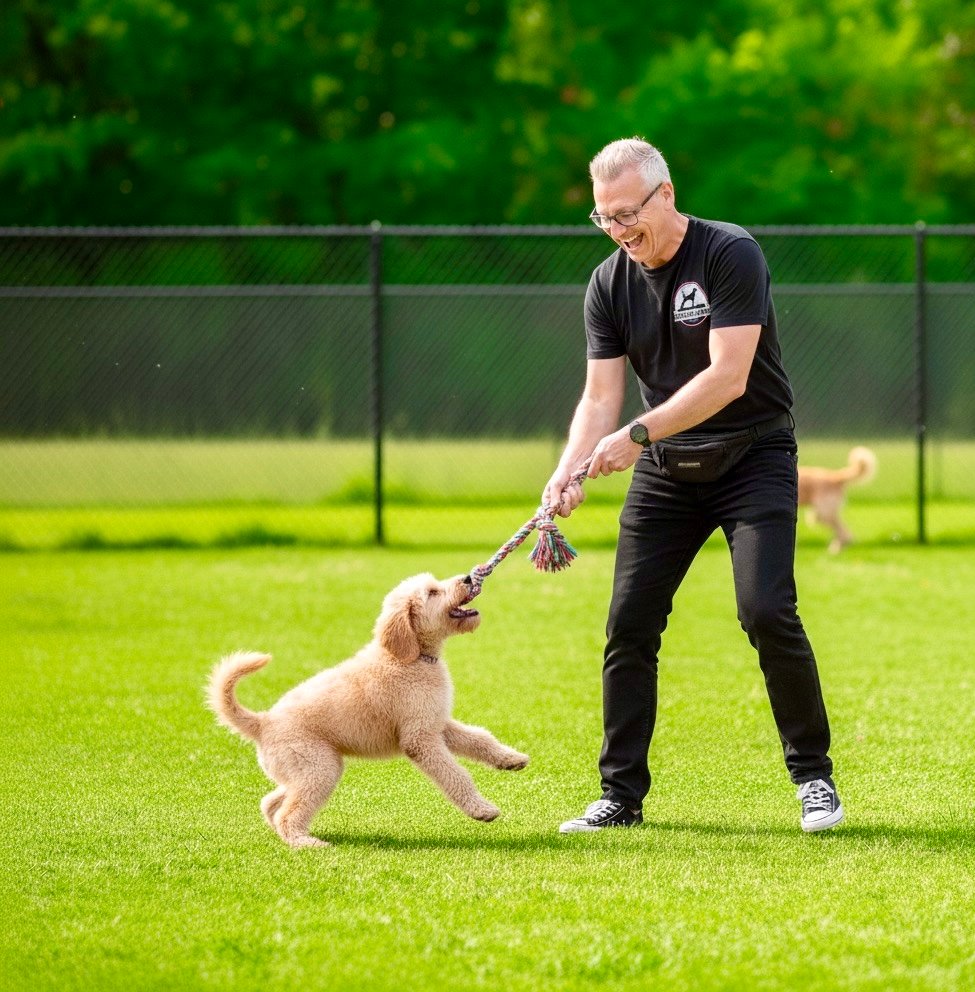
If you are playing tug, let the toy go dead. Say Drop it. When the puppy releases, say YES and restart the game. The game itself becomes part of the reward.
Show the second ball, cue Drop it, mark the release, then throw the second ball. This works beautifully for dogs who love chase more than food.
Practice this before you need it. You do not want the first serious Drop It rep happening while your puppy has something dangerous in their mouth.
Some dogs need more of a trade. Some need more of a game. Some need both. The point is to teach the release without turning it into conflict.
Most training breakdowns are not because the puppy is difficult. They happen because the reps got muddy.
Progress usually looks like better timing, cleaner pictures, faster responses, and less confusion. Not perfection. Not magic. Just cleaner reps stacking over time.
The puppy responds faster, the picture looks cleaner, and you feel less like you’re making things up as you go.
Perfection on day one. Every rep being magical. Or your puppy suddenly deciding they’re a college graduate.
| Date | Skill | Could Puppy Do It? | Food Used | Notes |
|---|---|---|---|---|
| ____/____/____ | ____________ | ☐ Yes ☐ No | ____________ | ____________ |
| ____/____/____ | ____________ | ☐ Yes ☐ No | ____________ | ____________ |
| ____/____/____ | ____________ | ☐ Yes ☐ No | ____________ | ____________ |
| ____/____/____ | ____________ | ☐ Yes ☐ No | ____________ | ____________ |
| ____/____/____ | ____________ | ☐ Yes ☐ No | ____________ | ____________ |