Exceptional Canines™ Puppy Development Center
Raising a Puppy Is a Marathon, Not a Sprint.
Every stage comes with a new “oh cool… so we’re doing that now” moment. This page tells you what’s normal, what matters most, and what we do in real homes with real distractions.
How Dogs Learn
Dogs are tonal, visual, and spatial learners.
Tone + body + space matter more than volume.
Commands
Say it once.
Give the dog time to think.
Back it up with position — not extra words.
Marker
Marker word: YES
Timing: within ½ second.
Food is a tool, not a bribe.
Calm Wins
No intensity.
No chaos.
No staring contests.
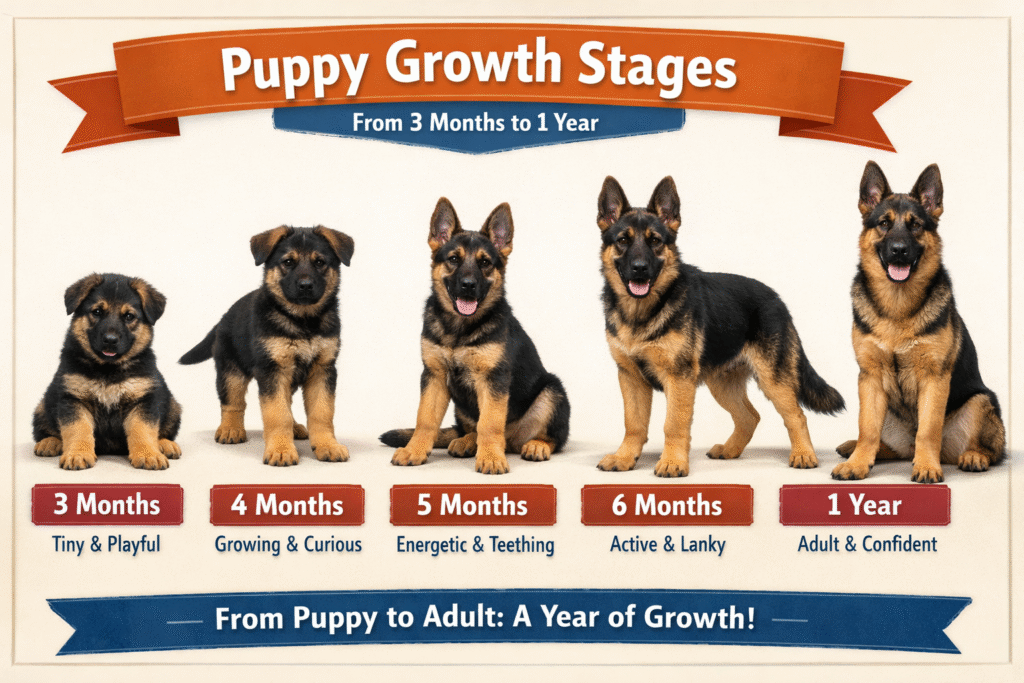
Stage 1: Around 3 Months
Boundaries • potty structure • calm routines • first real learning
Your puppy looks like a fuzzy baby deer with bad brakes — but don’t let the clumsy fool you. This is when we build the foundation that prevents the “why is my dog doing this” phase later.
What we focus on
  • Potty structure (schedule + supervision + prevention)
  • Crate + confinement routines (calm, not dramatic)
  • Boundary basics (doors, thresholds, furniture rules)
  • Core commands (said once, backed by space)
Owner rule
If the puppy is loose in the house, somebody is responsible for that puppy. Freedom is earned. Early freedom is where accidents (and bad habits) are born.
Training rhythm: short reps, calm tone, clean follow-through. No repeating commands.
Socialization window (handled correctly)
Socialization is not “let everyone pet my puppy.” It’s controlled exposure with a calm puppy and a calm handler. We introduce the world in a way that builds confidence — not excitement and chaos.
surfaces sounds people shapes (hats/uniforms) calm dogs vet “happy visits”
The rule: Don’t throw them into the deep end. We build confidence in layers. If your puppy freezes, avoids, or floods emotionally — that’s information. We adjust.
Printable Socialization Checklist
Click here to download the checklist (swap this link to your real PDF/drive link)
Stage 2: Around 4 Months
Teething • mouth manners • bite inhibition • impulse control begins
At 4 months, curiosity increases and teeth become tiny weapons. This is where we teach mouth manners and prevent the “land shark lifestyle.”
Bite Inhibition (how we do it)
  1. Startle → freeze. Quick, sharp “OUCH” (not screaming), then stop moving.
  2. Redirect. Give a chew item immediately.
  3. End fun if needed. Calmly remove the puppy from the play space, or you leave.
  4. Re-engage later. Short reset, then try again. Consistency matters.
No grabbing muzzles. No wrestling. No chaos. We teach what to do, then we hold that line calmly.
Teething survival
  • Rotate chew toys (don’t leave everything out)
  • Freeze a wet cloth or a food-stuffed toy for sore gums
  • Keep shoes, cords, and “expensive mistakes” out of reach
  • Use structure: crate / leash / supervision instead of hoping
If your puppy is chewing the house, it’s not personal. It’s just under-managed.
Stage 3: Around 5 Months
“Regression” moments • distraction training • relationship rules
This is the “wait… didn’t you already know this?” phase. Progress isn’t a straight line — puppies zig and zag. We don’t panic. We tighten structure.
Always be training (but not all day)
You don’t need marathon sessions. You need reps in real life: the front door, the leash clip, the food bowl, the couch boundary, the “place” routine.
Command rule: say it once, then enforce with body/space. Give the dog time to think. No repeat commands.
Skills that pay dividends
  • Recall (start easy, then add distractions)
  • Place (calm default behavior)
  • Leash manners (position, not pulling contests)
  • Impulse control (waiting at doors, food, thresholds)
Relationship fundamentals: structure before freedom, structure before affection. Calm is what gets access.
Stage 4: Around 6 Months
Adolescence • independence • exercise + brain work • proofing
Welcome to adolescence — where your dog tries on a new personality like it’s a hoodie. This is not “your dog becoming bad.” This is your dog becoming confident enough to test the system.
What we do now
  • Proof commands (different rooms, different places, real distractions)
  • Keep structure tight (freedom is earned and maintained)
  • Stop “negotiating” (calm follow-through, every time)
  • Address issues early (don’t wait and hope)
Exercise: body + brain
Physical outlets matter. Mental outlets matter just as much. Short training reps (5–10 minutes) a few times a day beat one long “training day” once a week.
  • structured walks (position, calm)
  • fetch with rules
  • hide-and-seek (tracking games)
  • puzzle feeders used strategically
Potty training note (for the potty page)
If you’re seeing “random” accidents around 5–6 months, don’t label it stubborn. Check management first: supervision, timing, access, and whether the dog is rehearsing the wrong habit. Clean correctly, tighten structure, and get back to reps.
Want this done cleanly and fast?
If your puppy is practicing chaos, they’ll get better at chaos. If your puppy is practicing structure, they’ll get better at structure. That’s the whole game.
Exceptional Canines™ • In-home • behavior-first • calm structure • real life proofing
Exceptional Canines™ Recommends
Crates & Crate Training Gear
These are the crates, chews, and setup tools I actually recommend to clients — based on real dogs, real homes, and real behavior work. No fluff. No gimmicks. Just gear that supports calm structure.
Open Ingo’s Amazon Storefront
Heavy-Duty Crates Wood & Wire Furniture Crates Travel / Vari Kennels Wire Crates w/ Dividers Portable / Canvas Crates Kongs, Chews & Cleaners
Trainer note: Don’t overthink brand names. Size, stability, comfort, and proper crate conditioning matter more than logos.
As an Amazon Associate, I earn from qualifying purchases.

Welcome

tips and tricks For Your Puppy

Submit A Valid Email And Get Our Weekly Newsletter Completely Free