
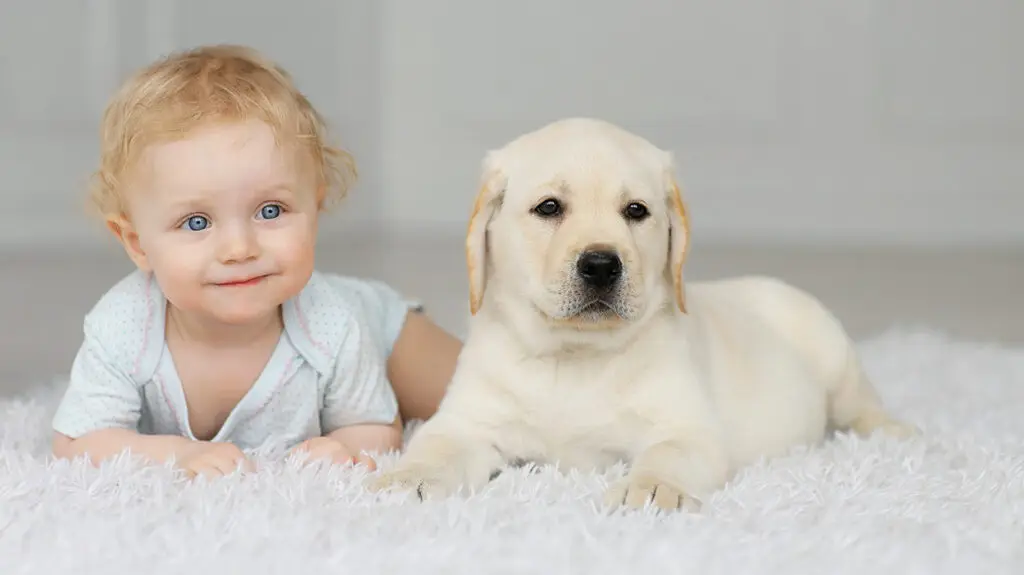
When your baby arrives, life changes in a big way for everyone—including your four-legged family member. Between diapers, midnight feedings, and the occasional “what day is it?” moment, you’ve got plenty to think about. But here’s one thing that’s easy to miss: introducing your baby to your dog the right way. If your dog is a seasoned pro around kids, great, less work for you. But if your pup’s only experience with babies comes from TV commercials, we’ve got some training to do. Hiring a dog trainer from Exceptional Canines to come in your home was a smart decision!
Expose your dog to the baby “gear parade”—strollers, playpens, highchairs. Let them sniff and explore at their own pace. No forcing!
Make sure “Sit,” “Down,” and “Stay” are second nature. Five short, fun sessions a day (before mealtime) will work wonders.
Keep the nursery off-limits unless you’re in there together.
When baby is in the room, increase your attention to the dog. We’re building the “baby = good things happen” connection.
Use a leash if your dog is still warming up to baby time. One adult handles baby, the other manages the dog.
Remember—slow and steady beats rushed and risky.
Done right, your dog won’t just tolerate your new baby—they’ll be best buds before you know it.
This isn’t just about preventing problems—it’s about creating a friendship that’ll melt your heart.
Scenario 1 – Affection Redistribution Before Baby
Goal: Gradually reduce the dog’s dependency on constant human affection so the change doesn’t feel sudden when baby arrives.
Timeline: Start 3 months before due date
Protocol: Week 1–4: Begin rewarding calm independence.
Practice “Place” and “Stay” with a mat in the same room but a few feet away from owner.
Use operant conditioning: Reinforce (YES + treat +)
Week 5–8: Increase duration & distance. Owner sits across the room, reads, or scrolls their phone — reinforce calmness without constant physical touch.
Begin pairing a classical conditioning cue (“That’s enough or ALL DONE”) with the end of petting, so the dog learns the affection session’s predictable start & stop.
Week 9–12: Integrate baby-related distractions. Play recordings of baby noises at low volume, toss a treat to the mat when the dog remains calm. Gradually increase volume over days.
Scenario 2 – Introducing Baby Sounds, Smells & Movements
Goal: Create positive associations with baby stimuli before baby is physically present.
Timeline: Start 2–3 months before due date
Protocol: Sound Desensitization:
Use YouTube or sound libraries for baby crying, giggling, and babbling. Start at low volume → treat calm behavior → gradually increase over weeks.
Introduce baby lotion, wipes, and blankets early. Pair each scent exposure with high-value treats.
Movement Simulation:
Carry a weighted doll in your arms, in a sling, and in a stroller. Cue the dog to walk politely beside you. Reward calm, loose-leash behavior.
Goal: Establish physical spaces where the dog can retreat or stay when baby is active.
Timeline: Start 2 months before due date
Protocol:
Week 1–2: Introduce “Place” or “Bed” in a quiet area (bedroom corner, crate, or playpen). Reward going there on cue.
Week 3–4: Add mild distractions (TV, phone calls) while rewarding the dog for staying in place.
Week 5–8: Simulate “baby chaos” — baby noise recordings, movement, new furniture. Reward dog for staying calm in their space during these moments.t
Scenario 4 – Structured Greetings & Affection on Cue
Goal: Prevent over-excitement when owner’s hands are full with baby.
Timeline: Start 6–8 weeks before due date
Protocol:
Practice walking in the door with hands full (bag, pillow, doll) Send your and only greeting the dog once they sit and wait. Reinforce with verbal marker “Yes” + treat when calm behavior is maintained.
This cue signals the end of interaction. Classically condition it by saying “All done,” standing up, and turning away every time you end petting or play.
Goal: Prevent boredom and attention-seeking behaviors when the baby is taking priority.
Timeline: Start 1 month before due date
Protocol:
Daily Enrichment:
Rotate puzzle feeders, frozen Kongs, scent games, and lick mats.
Independent Play Training:
Give enrichment items in a designated “dog zone” while you tend to something else. Pair your departure to another room with a positive reinforcement item so the dog associates your absence with something rewarding.